
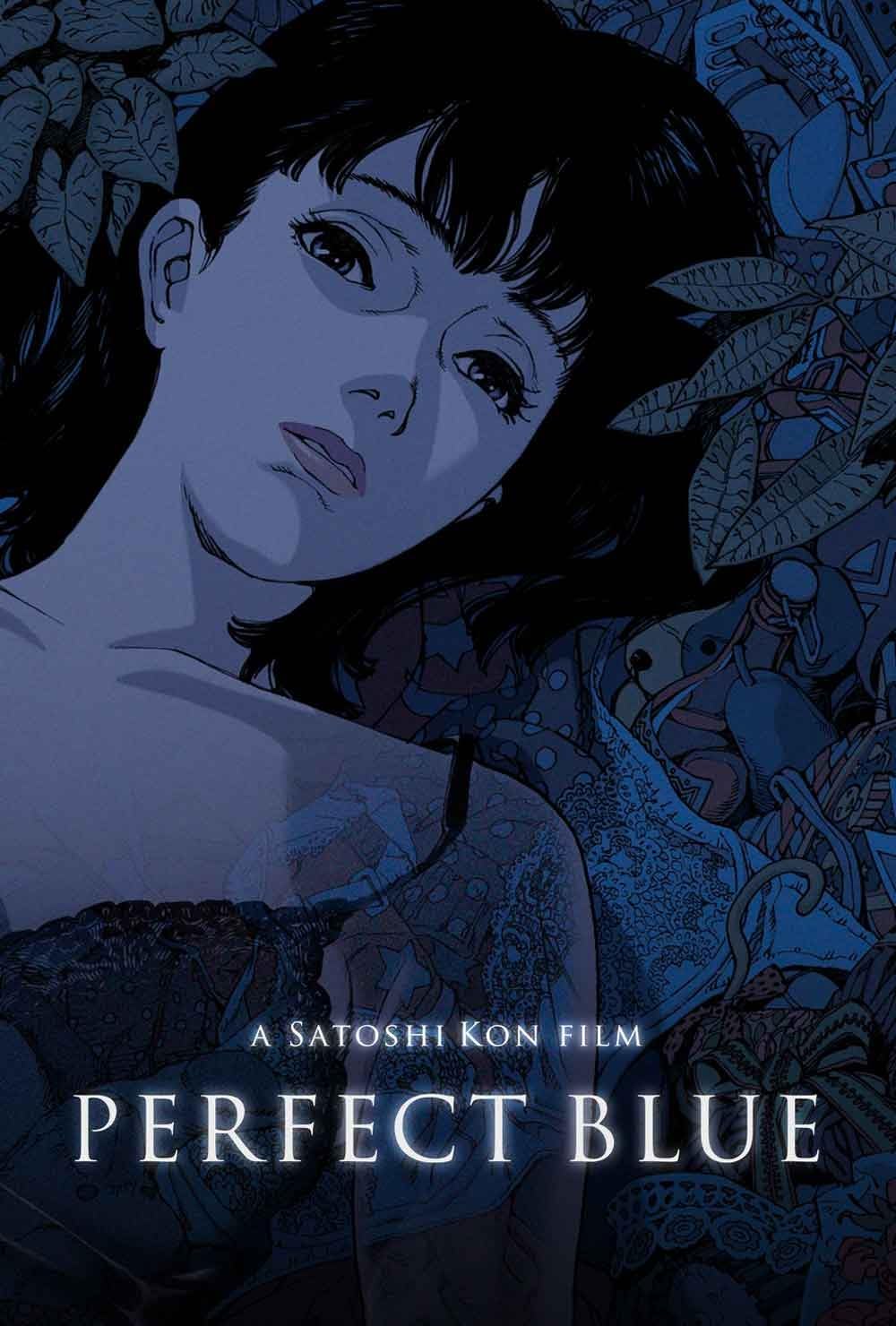
In 1997, a relatively unknown director named Satoshi Kon delivered what would become one of anime's most psychologically complex and disturbing films. Perfect Blue wasn't just another animated feature—it was a visceral exploration of identity, fame, and the fragmentation of reality that announced the arrival of one of cinema's most visionary talents.
What makes Perfect Blue so remarkable isn't just its unflinching examination of celebrity culture and obsession, but how it uses animation as the perfect medium to blur the lines between what's real and what's imagined. This wasn't the anime most Western audiences knew in the late '90s. There were no giant robots, magical girls, or fantastical adventures. Instead, Kon crafted a deeply unsettling thriller that could have easily been live-action—except animation allowed him to achieve something live-action never could.
From Pop Idol to Psychological Horror
The film follows Mima Kirigoe, a member of the J-pop idol group CHAM! who decides to leave music behind to pursue a serious acting career. It's a decision that sets off a chain of events involving an obsessive stalker, mysterious murders, and Mima's gradual descent into psychological torment. But Perfect Blue is far more than a simple stalker thriller—it's a meditation on identity, performance, and the price of fame.
Based loosely on Yoshikazu Takeuchi's novel Perfect Blue: Complete Metamorphosis, the film underwent significant changes under Kon's direction. The original story was described as a straightforward "splatter/psycho-horror" tale, but Kon transformed it into something far more sophisticated. With permission from Takeuchi, Kon was allowed to change anything except three core elements: the protagonist must be an idol, there must be a stalker, and it must be horror.
What Kon created was a narrative labyrinth where viewers constantly question what's real. Is Mima filming a rape scene for her TV drama Double Bind, or is she actually being assaulted? Are we watching her memories, her performance, or her delusions? The film's genius lies in how it makes the audience complicit in this uncertainty, forcing us to experience Mima's psychological fragmentation firsthand.
Animation as the Perfect Medium for Unreliable Reality
Kon chose animation deliberately, not despite the story's realistic setting, but because of it. As he explained, his goal wasn't to "depict landscapes and people that look as if they are real" but to "depict the moment when landscapes and people that look as if they are real suddenly reveal themselves to be 'fiction' or 'pictures'." Animation allowed Kon to seamlessly transition between reality and fantasy, between Mima's actual experiences and her psychological projections.
The film's visual storytelling is masterful in its deception. Scenes begin realistically, only to reveal themselves as performances, dreams, or delusions. The famous sequence where Mima appears to be filming the rape scene dissolves into reality, then back into performance, creating a vertigo-inducing effect that mirrors the protagonist's mental state. This technique would become a hallmark of Kon's work, appearing later in Millennium Actress, Paranoia Agent, and Paprika.
A Critique of Celebrity Culture and Male Gaze
Perfect Blue functions as a sharp critique of celebrity culture, particularly the commodification of female performers in Japan's idol industry. Mima's struggle isn't just personal—it's systemic. She's trapped between the "pure" image her fans demand and her desire for artistic growth and autonomy. The mysterious website "Mima's Room," which chronicles her private thoughts without her permission, serves as an early prediction of how the internet would enable unprecedented invasion of celebrity privacy.
Scholar Susan Napier has noted the film's exploration of the male gaze, showing how it evolves from something restrictive and harmful to something more complex. The stalker Me-Mania represents the most toxic extreme of fan obsession, while the film itself examines how society's expectations can psychologically destroy the women it claims to adore.
The revelation that Mima's manager Rumi is behind the murders and the alternate online identity adds another layer to this critique. Rumi, a former idol herself, cannot accept that her protegeé wants to move beyond the "pure" idol image. Her creation of the "real Mima" represents the industry's—and society's—refusal to allow women to grow and change.
Technical Brilliance and Production Challenges
Originally conceived as a direct-to-video release with a modest budget of approximately 90 million yen, Perfect Blue was elevated to theatrical status only late in production. This origin story explains both its intimate scale and its remarkable efficiency—every scene serves the psychological narrative, with no wasted moments or unnecessary flourishes.
The film's production was notable for several reasons. It marked the beginning of Kon's collaboration with screenwriter Sadayuki Murai, who would become crucial to developing the director's themes of blurred reality. It was also Kon's first work at Madhouse studio, beginning a partnership that would produce all of his subsequent films.
Interestingly, Perfect Blue represented a transition point in animation technology. While still primarily hand-drawn, it incorporated early digital techniques that would become standard in later years. The film's realistic character designs and detailed backgrounds created a visual authenticity that made its psychological unreliability even more effective.
International Recognition and Lasting Impact
Despite its modest origins, Perfect Blue gained international recognition when it premiered at the Fantasia International Film Festival in Montreal. The film's psychological complexity and mature themes found audiences hungry for anime that challenged preconceptions about the medium. It wasn't Akira or Ghost in the Shell—it was something entirely new.
The film's influence can be seen throughout cinema. Director Darren Aronofsky purchased the rights to remake Perfect Blue, though he ultimately used elements in Black Swan instead. The psychological thriller's DNA can be found in numerous films that explore celebrity culture, social media obsession, and the fragmentation of identity.
Critics and scholars have consistently praised Perfect Blue as a masterpiece of animation and psychological horror. It's frequently cited as one of the greatest anime films ever made, standing alongside works by Miyazaki, Takahashi, and Oshii as proof of animation's artistic potential.
The Birth of a Visionary
Perfect Blue established themes that would define Kon's tragically brief career. The blending of reality and fantasy, the exploration of performance and identity, the sympathetic portrayal of women under societal pressure—all would reappear in his subsequent works. But Perfect Blue remains unique in its uncompromising darkness and psychological intensity.
The film also demonstrated animation's unique ability to explore internal psychological states. Where live-action might struggle to visualize mental fragmentation, animation could seamlessly blend objective reality with subjective experience. This insight would influence not just Kon's later work, but anime as a medium.
Looking back over 25 years later, Perfect Blue feels remarkably prescient. Its exploration of online identity, celebrity stalking, and the psychological toll of constant public scrutiny anticipated many aspects of our current digital age. The film's questions about authenticity and performance feel more relevant than ever in an era of social media personas and parasocial relationships.
For newcomers to Kon's work, Perfect Blue remains the essential starting point—not because it's his best film (though many would argue it is), but because it establishes the visual and thematic vocabulary he would spend his career refining. It's a film that rewards multiple viewings, revealing new layers of meaning and technique each time.
Perfect Blue stands as proof that anime could be more than entertainment—it could be art of the highest caliber, using the unique properties of animation to explore the deepest questions of human experience. In an industry often focused on commercial considerations, Kon created something uncompromisingly personal and universal, a film that continues to disturb, fascinate, and inspire more than two decades after its release.
Log in to leave a comment.
No comments yet. Be the first!