

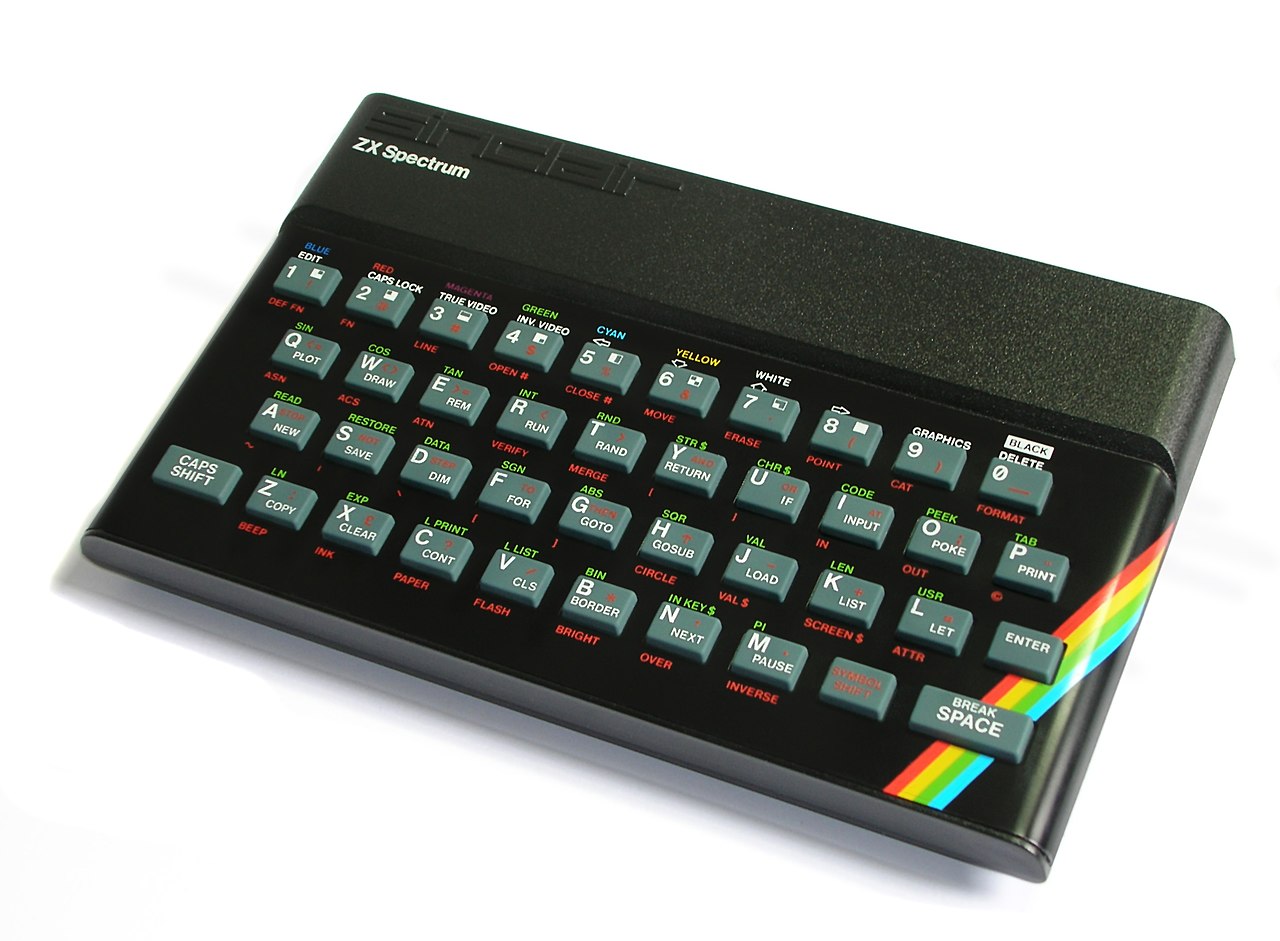
In the pantheon of British inventors, Sir Clive Sinclair occupies a unique place. While others gave us steam engines or television, Sinclair gave Britain something equally transformative: affordable home computing. His ZX Spectrum didn't just put computers in people's homes—it put programming power in teenage bedrooms and birthed an entire generation of coders who would define the British video game industry.
But the road to the Spectrum began much earlier, with a young man who couldn't quite fit in at school and found solace in the world of electronics.
The Making of an Electronics Pioneer
Born in 1940 to a family of engineers, Clive Marles Sinclair seemed destined for a technical career. His grandfather George had been a naval architect who perfected the paravane mine-sweeping device, while his father Bill was a mechanical engineer. But young Clive's path would be uniquely his own.
By age 18, Sinclair was already selling miniature electronic kits by mail order, sketching radio circuits in exercise books and calculating costs down to the penny. His entrepreneurial spirit was evident early—one notebook from 1958 shows him planning to produce 1,000 radio kits per month, carefully noting advertisement rates for electronics magazines and supplier costs for components.
After a brief stint as assistant editor of Instrument Practice magazine, Sinclair took the plunge and founded Sinclair Radionics in 1961. His choice of name was telling—"Sinclair Electronics" was already taken, and "Sinclair Radio" didn't sound quite right. "Radionics" suggested something more futuristic, more ambitious.
The Calculator Revolution
Sinclair's first major success came with the Sinclair Executive in 1972—the world's first truly pocket-sized electronic calculator. At a time when most calculators were desk-bound monsters, the Executive was sleek, sophisticated, and genuinely portable. It was everything Sinclair's designs would become known for: miniaturized, elegant, and affordable.
But Sinclair's vision extended far beyond calculators. The 1970s saw a parade of ambitious products from Sinclair Radionics: miniature televisions, digital watches, and various electronic gadgets. Not all were successful—the Black Watch digital wristwatch, launched in 1975, was plagued with accuracy problems and battery life issues that led to Sinclair Radionics' first major financial crisis.
The National Enterprise Board's intervention in 1976 marked the end of Sinclair's first company, but it wasn't the end of his ambitions. With a £10,000 golden handshake and his entrepreneurial spirit intact, Sinclair was already planning his next move into the emerging world of microcomputers.
From Cambridge to Computing
The transition from Sinclair Radionics to Sinclair Research wasn't straightforward. It involved a complex corporate shuffle through Science of Cambridge Ltd (named for their location near the university), multiple name changes, and the eventual departure of Christopher Curry, who would go on to co-found Acorn Computers—Sinclair's greatest rival.
The breakthrough came with the MK14 microcomputer kit in 1978, based on the National SC/MP processor. It was an educational tool, really—a way for electronics enthusiasts to learn about microprocessors. But it planted the seed for something much more ambitious.
Sinclair's chief engineer Jim Westwood began working on a successor in May 1979, this time based on the more powerful Zilog Z80 processor. The goal was audacious: create a complete home computer that could sell for under £100 when competitors like the Commodore PET cost around £700.
The ZX Revolution Begins
The ZX80, launched in February 1980, was a revelation. At £79.95 in kit form and £99.95 ready-built, it made home computing accessible to ordinary families for the first time. The name itself was carefully chosen—"ZX" suggested something futuristic and unknown, while "80" anchored it in the year of launch.
The ZX80 was immediately successful, but Sinclair wasn't content to rest. The ZX81, launched in 1981 at an even lower price point (£49.95 for the kit), became a cultural phenomenon. Over 1.5 million units were sold, and suddenly programming wasn't just for computer science students—it was for anyone curious enough to type "LOAD" and wait for the distinctive tape loading sounds.
But it was the ZX Spectrum, launched in April 1982, that would define Sinclair's legacy and transform British culture.
A Spectrum of Possibilities
The ZX Spectrum was revolutionary not just for its £125 price tag (for the 16KB version) but for its color capabilities. This wasn't just another black-and-white computer—this was a machine that could display eight colors, opening up entirely new possibilities for games, graphics, and creativity.
"The ZX Spectrum remained more affordable than other computers on the market, including the BBC Micro, VIC-20, and Apple II, and during a time of recession and high unemployment in the UK, was positioned by Sinclair as a low-cost home computer for productivity applications."
But productivity wasn't what made the Spectrum special. What made it legendary were the teenagers who received it as a gift and discovered they could create their own worlds.
The Bedroom Coders
The Spectrum's impact on British culture can't be overstated. Unlike expensive American computers that remained in offices and computer labs, the Spectrum found its way into teenage bedrooms across Britain. Armed with nothing but the included manual, a cassette player, and endless curiosity, a generation of "bedroom coders" began creating games that reflected distinctly British sensibilities.
These weren't polished products from established software houses—they were quirky, experimental games created by teenagers and young adults who sold their creations through mail order and word of mouth. By 1984, over 3,500 games had been released for the ZX Spectrum, many of them bearing the unmistakable mark of British humor and creativity.
Games like Manic Miner, Jet Set Willy, and countless others didn't just entertain—they inspired. Seeing that a teenager with a Spectrum could create something commercially successful sparked imaginations across the country. Programming wasn't some mysterious art practiced by professionals in white coats—it was something you could do in your bedroom with nothing but determination and a £125 computer.
Cultural Impact Beyond Gaming
The Spectrum's influence extended far beyond gaming. It democratized programming in a way that no computer before it had managed. The included BASIC programming manual wasn't just documentation—it was an invitation to create. Children who might never have considered themselves technically minded found themselves typing in program listings from magazines, modifying code, and eventually writing their own programs.
The machine's limitations—just 48KB of RAM, a membrane keyboard that was notoriously difficult to type on, and sound capabilities that could charitably be described as "basic"—actually became creative catalysts. Programmers had to be ingenious, finding ways to create impressive effects within severe constraints. This culture of doing more with less would become a defining characteristic of British game development.
The Spectrum also democratized computer ownership across class lines. While expensive computers remained the province of wealthy families and institutions, the Spectrum was affordable enough for working-class families to buy as a Christmas or birthday gift. This meant that programming talent could emerge from anywhere, not just from privileged backgrounds.
The Peak and the Fall
By 1983, Sinclair Research was riding high. The company had achieved a pre-tax profit of £13.8 million on turnover of £54.53 million, and Sinclair himself was estimated to be worth over £100 million. Time magazine named the personal computer as 1982's "Machine of the Year," and Sinclair was spotlighted as one of six key figures in the computing revolution.
The success allowed Sinclair to pursue his other obsessions. He converted a mineral water bottling factory into the company's headquarters and bought Milton Hall for £2 million as a research facility. But success also bred overconfidence, and Sinclair's next ventures would prove less fortunate.
The Sinclair QL, launched in January 1984, was meant to be a more sophisticated 32-bit computer for professional users. But it suffered from design flaws and delays—fully working units weren't available until late summer, and the Advertising Standards Authority upheld complaints about Sinclair's practice of cashing checks months before shipping machines.
Even more damaging was the Sinclair C5 electric vehicle, launched in January 1985. Sinclair had long been fascinated by personal transportation, but the C5 was a commercial disaster, selling only 17,000 units and losing £7 million. Combined with the failures of the QL and the TV80 pocket television, the C5 destroyed investor confidence in Sinclair's judgment.
The End of an Era
By 1986, the dream was over. Facing financial difficulties and unable to raise new capital, Sinclair Research sold its computer product range and the "Sinclair" brand name to Amstrad for £5 million. The deal didn't include the company itself, only its products and name, but it marked the end of Sinclair's role as a major force in home computing.
The ZX Spectrum would continue under Amstrad's ownership until 1992, eventually selling over 5 million units worldwide. But without Sinclair's vision driving it forward, the magic was gone. The British computer boom of the early 1980s was over, replaced by the dominance of American and Japanese manufacturers.
The Legacy Lives On
Clive Sinclair continued inventing until his death in 2021, working on projects from folding bicycles to electric vehicles. But his greatest achievement remained the ZX Spectrum and its impact on British culture. The bedroom coders who learned programming on Spectrum keyboards would go on to found some of Britain's most successful game development studios. The democratic approach to computing that Sinclair pioneered—making technology accessible rather than exclusive—would influence generations of entrepreneurs and inventors.
The ZX Spectrum didn't just put computers in British homes—it put the power of programming in British hands. In doing so, it created not just consumers of technology but creators, not just users but innovators. The teenage programmers hunched over membrane keyboards in 1980s bedrooms would become the architects of Britain's modern digital economy.
Sinclair's vision of computing as a democratizing force, accessible to anyone with curiosity and determination, seems almost quaint in today's world of locked-down devices and app stores. But perhaps that's exactly why we need to remember it—and him—so fondly. In an age when technology often feels like something done to us rather than by us, Sinclair's legacy reminds us of a time when a £125 computer and an idea were all you needed to change the world.
Sir Clive Sinclair may have been many things—entrepreneur, inventor, dreamer, and occasional catastrophic failure—but above all, he was the man who taught Britain that computing wasn't just about big companies and bigger computers. Sometimes, the most powerful revolutions come in the smallest packages.
Log in to leave a comment.
No comments yet. Be the first!