
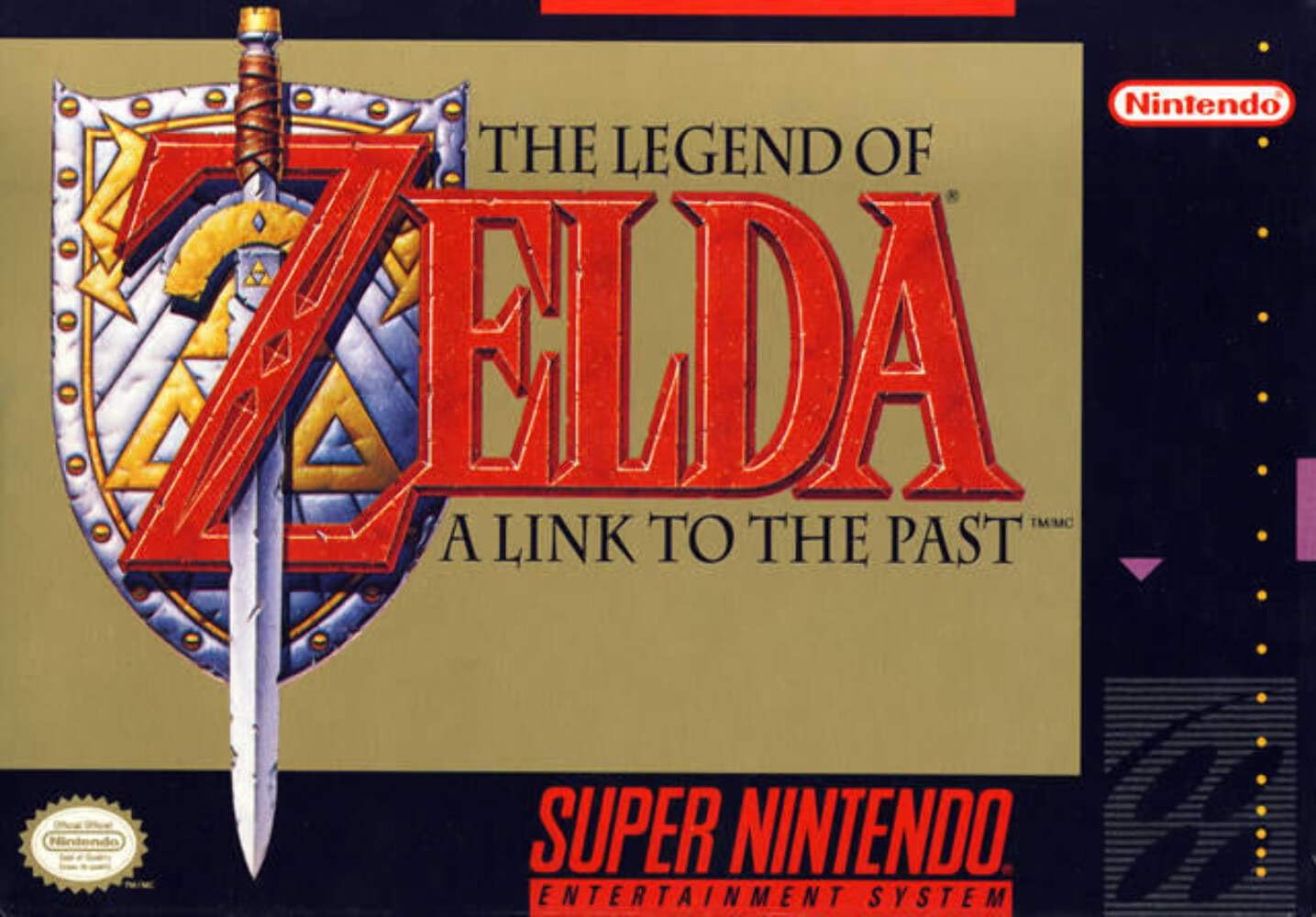
There's something magical about those first few notes of the overworld theme in The Legend of Zelda: A Link to the Past. You know the ones—that triumphant, soaring melody that made you feel like you could conquer the world, one dungeon at a time. Released in 1991 for the Super Nintendo, this wasn't just another Zelda game. It was the Zelda game that would define what the series could be for generations to come.
After the divisive side-scrolling experiment of Zelda II: The Adventure of Link, Nintendo faced a choice: double down on innovation or return to what made the original special. Thankfully, they chose both. A Link to the Past brought back the beloved top-down perspective while introducing concepts that would become series staples—parallel worlds, the Master Sword, and a level of storytelling that felt genuinely epic.
Two Worlds, One Incredible Adventure
The dual-world concept was nothing short of revolutionary. Sure, we'd seen alternate dimensions in games before, but never like this. The Light World and Dark World weren't just palette swaps—they were living, breathing counterparts that transformed familiar locations into twisted reflections of themselves. Kakariko Village became the Village of Outcasts, serene lakes turned into poisonous swamps, and that cozy house you'd grown to love? Probably occupied by monsters now.
What made this mechanic brilliant wasn't just its narrative weight, but how it fundamentally changed puzzle-solving. You'd get stuck in one world, flip to the other, and suddenly see a solution you'd never considered. It was like having two games in one cartridge, each complementing the other in ways that still feel clever today.
The Master Sword Changes Everything
Let's talk about that moment when you first pulled the Master Sword from its pedestal. You know the one—after collecting those three pendants, trekking through the Lost Woods, and finally standing before that legendary blade. The music swells, Link raises the sword triumphantly, and suddenly you're not just some kid on an adventure anymore. You're the chosen hero.
This wasn't just a better sword (though that upgrade was certainly welcome). The Master Sword represented something deeper—a connection to the world's history, a responsibility that went beyond just rescuing Princess Zelda. It was storytelling through gameplay at its finest, making you feel the weight of destiny without a single cutscene.
Technical Wizardry on 16-Bit Hardware
Nintendo pulled out all the stops for A Link to the Past. At a time when most SNES games shipped on 4Mbit cartridges, this game doubled that to 8Mbit, giving the developers room to create something truly expansive. The result was a world that felt massive yet intimate, packed with secrets but never overwhelming.
The visual design deserves special recognition. Those lush, colorful sprites brought Hyrule to life in ways the NES never could. The way morning light filtered through the trees, the ominous purple skies of the Dark World, the satisfying particle effects when you slashed bushes—every pixel felt purposeful. Even today, when 4K graphics are the norm, there's something timeless about A Link to the Past's visual language.
And Koji Kondo's soundtrack? Pure perfection. The overworld theme remains one of gaming's greatest compositions, but don't sleep on the dungeon music, the haunting Dark World melodies, or that absolutely spine-tingling Ganon battle theme. These weren't just background tracks—they were emotional storytellers that knew exactly when to soar and when to build tension.
Dungeon Design That Spoiled Us Forever
If you've played a Zelda game in the last thirty years, you've experienced the template that A Link to the Past perfected. Each dungeon was a carefully crafted puzzle box where you'd gain a new item early on, then spend the rest of your time learning how to use it creatively. The hookshot, the fire rod, the ice rod—these weren't just tools, they were keys to understanding each dungeon's unique logic.
The difficulty curve was masterful too. Early dungeons taught you the basics without feeling patronizing, while later challenges like the Ice Palace and Turtle Rock pushed your problem-solving skills to the limit. And those boss battles! Who could forget the epic showdown with Moldorm in the Tower of Hera, or the genuine terror of facing Ganon in his final form?
"My name is Chris Houlihan. This is my top secret room. Keep it between us, okay?"
Remember stumbling across that hidden room? For years, players wondered about Chris Houlihan's mysterious message, not knowing he was a contest winner whose prize was immortalization in gaming history. It's just one of countless secrets that made A Link to the Past feel truly alive.
The Blueprint for Everything That Followed
It's impossible to overstate A Link to the Past's influence on the series. The parallel worlds concept would return in A Link Between Worlds. The item-gated progression system became the series' DNA. Even Breath of the Wild's nonlinear exploration can trace its roots back to those moments when you'd wander off the critical path and discover something wonderful.
More importantly, this game established the emotional core that makes Zelda special. It wasn't enough to just save the princess—you were restoring balance to an entire world, reuniting families torn apart by evil, bringing light back to places consumed by darkness. Every NPC you helped, every maiden you rescued, every heart piece you found felt meaningful because it was all part of something larger.
A Living, Breathing World
What struck me most during my countless playthroughs was how lived-in Hyrule felt. The blacksmith's assistant worried about his missing partner. The flute boy's haunting melody echoed across time. Even minor characters like the sleeping man under the bridge or the treasure chest game operator felt like real inhabitants of this world rather than mere gameplay mechanics.
This attention to detail extended to the game's pacing too. A Link to the Past knew when to let you breathe, when to ramp up the tension, and when to reward exploration. Those quiet moments—riding around on your horse, discovering a fairy fountain, or just listening to the peaceful village music—were just as important as the epic boss battles.
The Perfect Port and Its Legacy
When A Link to the Past was rereleased as part of A Link to the Past & Four Swords for the Game Boy Advance in 2002, it proved that great game design is timeless. Sure, the screen was smaller and some colors were different, but the core experience remained just as magical. The addition of the Four Swords multiplayer component was fascinating too, offering a glimpse of what Zelda could become with cooperative play.
But the original SNES version remains the definitive experience. Whether you played it through Nintendo Switch Online, the SNES Classic, or dusted off your original cartridge, that first playthrough—or your tenth—never loses its luster.
Why It Still Matters
In an era of open-world games and infinite content, A Link to the Past stands as a masterclass in focused design. Every screen was crafted with purpose, every secret placed with intent, every progression gate designed to teach you something new. It's a game that respects your time while never making you feel rushed.
More than thirty years later, A Link to the Past remains the gold standard for 2D adventure games. It's the entry point that countless players discovered first, the comfort food we return to when modern games feel too complex, and the reminder of what happens when developers are given the time and resources to perfect their vision.
So tell me—did you play this? Did you feel that same sense of wonder when you first stepped into the rain-soaked Hyrule Castle courtyard? Did the Dark World's twisted landscape give you chills? Did you spend hours hunting for those final heart pieces, not because you had to, but because you couldn't bear to leave this world behind?
Because if you did, you know exactly why The Legend of Zelda: A Link to the Past isn't just one of the greatest games ever made—it's the game that taught us what adventure could truly mean.
Log in to leave a comment.
No comments yet. Be the first!