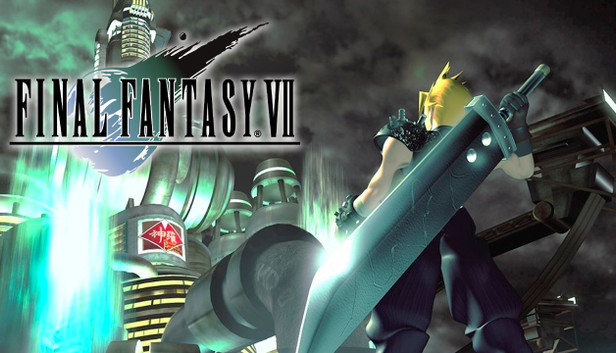
There are watershed moments in gaming history—events so seismic they split the timeline into "before" and "after." January 31, 1997, was one of those days. That's when Final Fantasy VII launched in Japan, and while most of us in the West had to wait until September, the reverberations were already crossing oceans. Square had done something unprecedented: they'd taken their beloved but niche JRPG series and turned it into a cultural phenomenon.
But let's rewind a bit. If you were a JRPG fan in the early '90s, you were part of a pretty exclusive club. Sure, we had our Dragon Warriors and our Secret of Manas, but these were largely seen as curiosities—beautiful, intricate, but ultimately foreign experiences that appealed to a dedicated few. Nintendo held the keys to the kingdom, and Square was their faithful vassal, crafting gems like Final Fantasy VI for the Super Nintendo.
Then came the great console war of the mid-'90s, and everything changed.
The Platform That Changed Everything
Picture this: it's 1994, and Square is deep in development on what would become Final Fantasy VII. Originally planned for the Super Nintendo, the project quickly outgrew the cartridge format's limitations. Nintendo's upcoming Ultra 64 (later the N64) seemed like the obvious choice, but there was a problem—Nintendo was sticking with cartridges while Sony's upstart PlayStation promised the vast storage capacity of CD-ROMs.
The decision to jump ship from Nintendo to Sony wasn't just about storage space; it was about artistic vision. Hironobu Sakaguchi and his team had dreams that couldn't be contained in 32 megabytes. They wanted full-motion video, they wanted CD-quality audio, and they wanted to push the boundaries of what a video game story could be. The PlayStation, with its 650-megabyte CDs, offered them the canvas they needed.
This platform switch sent shockwaves through the industry. Nintendo lost one of their most prestigious third-party developers, while Sony gained a system-seller that would help define their new console. It was a calculated risk that paid off spectacularly—not just for Square, but for the entire medium.
A Visual Revolution
Remember the first time you saw those opening moments? The camera swooping through the industrial sprawl of Midgar, Aerith's flower petals floating through the air, and then—that scene—Cloud leaping from the train in all his polygonal glory? If you played games in 1997, you remember exactly where you were when you first witnessed this technical marvel.
Final Fantasy VII didn't just look different from its predecessors; it looked different from everything. Those pre-rendered backgrounds were lush and detailed in ways we'd never seen, while the character models—chunky and angular as they were—moved through fully three-dimensional environments. The contrast between the detailed field graphics and the more stylized battle models became part of the game's charm, giving players' imaginations room to fill in the gaps.
And then there were the summoning sequences. Holy hell, those summoning sequences. The first time Knights of Round kicked in, you knew you were in for a nearly five-minute cinematic experience that pushed the PlayStation to its absolute limits. These weren't just special moves; they were technical showcases disguised as gameplay elements.
The Story That Shook Us
But visuals were only part of the equation. Final Fantasy VII told a story that was darker, more complex, and more emotionally devastating than anything the series had attempted before. This wasn't about crystals and medieval kingdoms—this was cyberpunk meets environmentalism meets corporate dystopia, wrapped in a narrative that dealt with identity, memory, and the cost of progress.
Cloud Strife wasn't your typical square-jawed hero. He was confused, unreliable, and carrying psychological baggage that would make any therapist rich. The game's exploration of his fractured psyche, his false memories, and his relationship with the legendary Sephiroth created a narrative complexity that elevated video game storytelling to new heights.
And then there's Aerith. Her death scene in the Forgotten City remains one of the most shocking moments in gaming history—not just because of what happened, but because of how it happened. No dramatic boss fight, no last-minute rescue, just a sword through the back and the slow fade to black. Square taught us that our emotional investment in characters could be weaponized, and they did it with surgical precision.
The Music of Our Lives
Nobuo Uematsu's score deserves its own paragraph, hell, its own article. "One-Winged Angel," "Aerith's Theme," "Those Who Fight Further"—these aren't just video game tracks, they're emotional touchstones that can instantly transport players back to their first playthrough. Uematsu understood that with CD-quality audio, he could create something approaching a full orchestral experience, and he delivered a soundtrack that stands among the greatest in any medium.
The music didn't just complement the gameplay; it elevated it. Every emotional beat was perfectly scored, every boss battle had its perfect musical accompaniment. When "One-Winged Angel" kicks in during the final boss fight, complete with its Latin choir, you weren't just fighting Sephiroth—you were participating in an epic opera.
The Materia System: Customization Perfection
Beyond the story and presentation, Final Fantasy VII introduced gameplay innovations that would influence JRPGs for decades. The Materia system was genius in its simplicity—magical orbs that could be slotted into weapons and armor, growing stronger with use and combining in unexpected ways. It was Pokemon for RPG mechanics, encouraging experimentation and offering genuine strategic depth.
Want to turn Barret into a magic user? Slot some Restore and Lightning materia into his gun. Need Cloud to tank damage? Load him up with HP Plus and Barrier materia. The system made every character potentially viable in any role, while still maintaining their unique characteristics through their weapons and Limit Breaks.
Cultural Impact and Legacy
Final Fantasy VII didn't just succeed commercially—it sold 2.3 million copies in Japan in its first three days and would go on to move over 13 million units worldwide. More importantly, it proved that JRPGs could be mainstream hits in the West. Suddenly, everyone wanted to know what other gems Japan had been hiding from us.
The game spawned an entire multimedia franchise: movies, anime, novels, and more games than you can shake a Buster Sword at. But perhaps its most lasting legacy is how it changed the perception of video games as a storytelling medium. This wasn't just entertainment; this was art that could make you cry, make you think, and make you question your assumptions about right and wrong.
Walk into any game store today and you'll still find Final Fantasy VII merchandise. Cloud's spiky blonde hair remains iconic. "Aerith or Tifa?" is still a debate that can start arguments. The game has been ported to virtually every platform imaginable, and Square Enix is currently in the middle of remaking it as a multi-part epic for modern audiences.
Did You Play This?
If you lived through 1997 as a gamer, you almost certainly played Final Fantasy VII. It was impossible to ignore—the buzz was everywhere, from gaming magazines to playground conversations. Even if you weren't typically a JRPG fan, you probably gave it a shot based on the universal acclaim.
And if you missed it the first time around? Well, you've had plenty of chances to catch up. The game has aged remarkably well, its core themes of environmental destruction, corporate power, and personal identity remaining painfully relevant. The story still hits like a truck, even if you know what's coming.
Final Fantasy VII wasn't just a great game; it was a moment in time when everything aligned perfectly. The right developers, the right platform, the right story, all coming together to create something that transcended its medium. It proved that video games could be more than just entertainment—they could be experiences that stay with you for life.
Twenty-seven years later, we're still talking about it. Still debating its themes, still humming its melodies, still getting chills when that opening theme kicks in. In an industry obsessed with the next big thing, Final Fantasy VII remains a testament to the power of ambition, artistry, and the magic that happens when developers dare to dream big.
Some games entertain. Some games challenge. Final Fantasy VII changed everything. And in doing so, it reminded us why we fell in love with this medium in the first place.
Log in to leave a comment.
No comments yet. Be the first!