

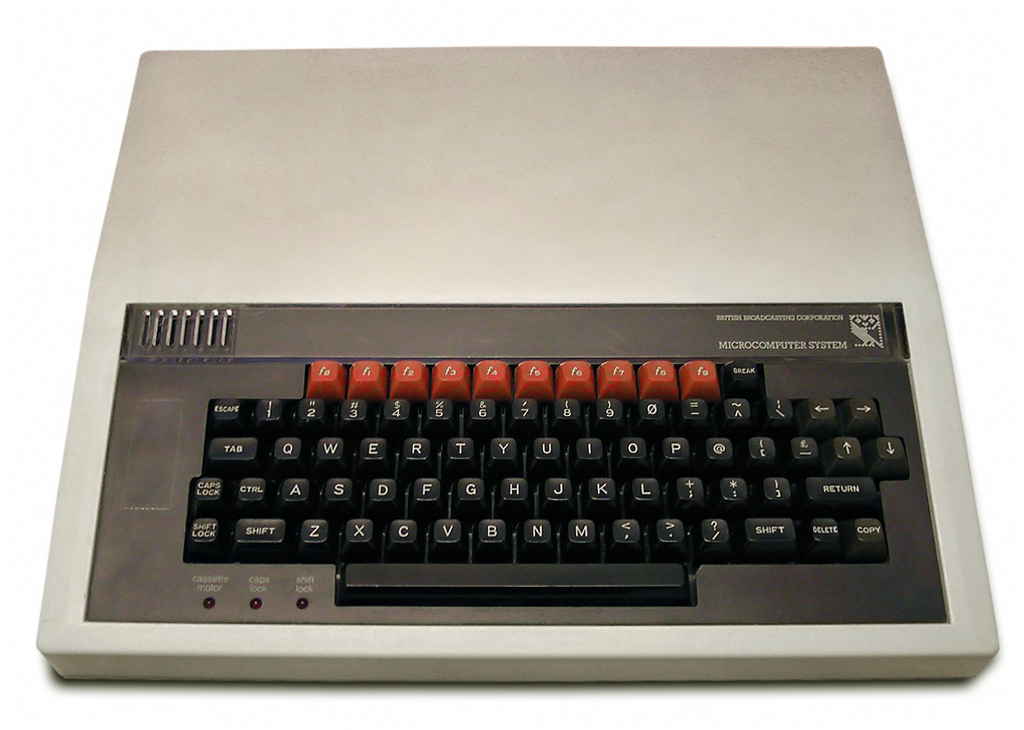
Picture this: it's 1981, and the BBC—yes, the same institution that gave us Doctor Who and David Attenborough—is about to launch one of the most influential computers in British history. The BBC Microcomputer, affectionately known as 'the Beeb,' wasn't just another home computer. It was the cornerstone of an ambitious national experiment in digital literacy that would shape an entire generation's relationship with technology.
The story begins with what might be the most intense week in British computing history. When the BBC put out a call for bids for their Computer Literacy Project, Acorn Computers had only sketched designs for their 'Proton' system. The team, led by legends Steve Furber and Sophie Wilson, had exactly seven days to build a working prototype. They worked through the night, fueled by determination and probably copious amounts of tea, to create something that would not only meet the BBC's ambitious specifications but exceed them in nearly every parameter.
A Nation's Digital Awakening
The BBC Computer Literacy Project wasn't born in a vacuum. It was a direct response to Christopher Evans' ITV documentary series 'The Mighty Micro,' which predicted the coming microcomputer revolution. The BBC's vision was radical for its time: rather than simply broadcasting about computers, they wanted to put actual computing power into the hands of every British schoolchild.
This wasn't just educational programming—it was social engineering on a national scale. The underlying philosophy, as outlined in the influential 1979 Microelectronics report, was that people should learn to use and control computers rather than feel dominated by them. Looking back from our smartphone-saturated world, this seems almost quaint, but in 1981 it was revolutionary thinking.
The computer that emerged from this vision was a marvel of engineering pragmatism. Built around the robust MOS Technology 6502 processor running at 2MHz, the BBC Micro came in two main flavors: the 16KB Model A (initially £235) and the more popular 32KB Model B (£335—about £1,000 in today's money). Yes, it was expensive, but it was built like a tank and designed to last.
More Than Just a Computer
What set the BBC Micro apart wasn't just its impressive specifications for the time, but its remarkable expandability. This was a machine designed by engineers who understood that real-world computing meant connecting to everything. The back panel bristled with ports: RS-423 serial, printer parallel, user parallel, cassette interface, and the famous 1MHz bus that allowed for seemingly endless expansion.
The crown jewel was the Tube interface—a second processor port that was genuinely revolutionary. Want to run CP/M software? Plug in a Z80 second processor. Need more power? Add a 6502 second processor running at 3MHz. This modular approach was decades ahead of its time, anticipating the kind of expandable architecture we take for granted today.
But perhaps the most impressive feature was the display capabilities. The BBC Micro could switch between multiple graphics modes on the fly, from high-resolution monochrome (640×256) to colorful low-resolution modes, plus the ingenious Mode 7 teletext display that used almost no memory. This flexibility meant it could handle everything from simple programming exercises to sophisticated graphics applications.
BBC BASIC: The Language That Launched a Thousand Careers
At the heart of every BBC Micro was BBC BASIC, and what a BASIC it was. While other home computers shipped with stripped-down, almost toy-like versions of BASIC, the BBC's implementation was a powerhouse. It included proper procedures and functions, inline assembler for 6502 machine code, and sophisticated graphics and sound commands that made it genuinely useful for serious programming.
This wasn't accident—it was by design. The BBC wanted children to learn real programming, not just type in listings from magazines. BBC BASIC was structured enough to teach good programming habits while remaining accessible to beginners. The famous 'SOUND' command could generate everything from simple beeps to complex multi-channel compositions, while commands like 'DRAW' and 'PLOT' made graphics programming intuitive.
Conquering the Classroom
The BBC Micro's impact on British education was nothing short of transformational. By 1985, an estimated 80% of British schools had at least one BBC Micro. Walk into any British secondary school in the mid-1980s and you'd likely find a room full of these beige boxes, their distinctive startup beep echoing through corridors as students discovered the magic of making computers do their bidding.
This wasn't just about learning to use computers—it was about understanding them. The BBC Micro came with comprehensive manuals that didn't just explain how to use the machine, but how it worked. The famous 'Welcome' program that greeted new users wasn't just a demo—it was an invitation to peek under the hood and start tinkering.
The educational software ecosystem that grew up around the BBC Micro was equally impressive. Programs like 'Granny's Garden' introduced young children to adventure games and problem-solving, while more advanced software like 'Grass' (a complex ecological simulation) showed older students the power of computer modeling. This wasn't edutainment in the modern sense—it was serious software that happened to be educational.
Building an Industry
The BBC Micro's influence extended far beyond the classroom. It fostered a thriving cottage industry of software developers, hardware manufacturers, and computer enthusiasts. Companies like Superior Software, Acornsoft, and countless bedroom programmers created games and utilities that pushed the machine to its limits.
The magazine ecosystem was equally vibrant. Publications like 'Acorn User,' 'The Micro User,' and later 'Archimedes World' provided not just reviews and tips, but sophisticated programming tutorials and hardware projects. These weren't just consumer magazines—they were technical publications that assumed their readers wanted to understand and modify their computers.
Global Ambitions, Mixed Results
Acorn's attempts to export the BBC Micro's success met with limited success. Despite securing substantial orders from American schools (over $50 million worth by 1984) and establishing manufacturing partnerships in India and Mexico, the machine never achieved the global dominance its designers had hoped for.
Part of the problem was timing—by the time Acorn was ready to export in earnest, the American market was already dominated by Apple and IBM, while the rest of the world was fragmenting between different standards. The BBC Micro's very British-ness, from its teletext capabilities to its integration with UK television standards, made it harder to adapt to other markets.
But perhaps more fundamentally, the BBC Micro's success in the UK was inseparable from the unique circumstances that created it: a public broadcaster with a remit for education, a government willing to back radical educational initiatives, and a culture that was ready to embrace computing as a life skill rather than just entertainment.
Legacy of Innovation
The BBC Micro's most lasting contribution might not be the machine itself, but what it led to. Acorn's engineers used the BBC Micro as a development platform for their most ambitious project: the ARM processor. Originally designed to power a successor to the BBC Micro, ARM architecture now powers billions of smartphones, tablets, and embedded systems worldwide.
This isn't coincidence—it's the direct result of the engineering culture that created the BBC Micro. The same obsession with efficiency, expandability, and elegant design that made the BBC Micro special also created the ARM processor. When Steve Furber and his team designed ARM, they applied the same principles that made the BBC Micro great: do more with less, build for the future, and never compromise on quality.
The educational impact is harder to quantify but perhaps even more significant. An entire generation of British programmers, engineers, and computer scientists got their start on BBC Micros. From game developers to web pioneers, from startup founders to university professors, the BBC Micro alumni are everywhere in British technology.
The End of an Era
By 1994, when the last BBC Micros rolled off the production line, the computing world had moved on. The IBM PC had conquered the business world, while games consoles and early multimedia computers were capturing the home market. The BBC Micro's vision of computing—educational, hackable, and fundamentally serious—seemed almost quaint in the face of Windows and Nintendo.
But perhaps that vision was simply ahead of its time. Today, as we grapple with digital literacy, online safety, and the need to understand rather than just consume technology, the BBC Micro's philosophy feels remarkably contemporary. The idea that everyone should understand how computers work, not just how to use them, has never been more relevant.
The BBC Micro taught an entire generation that computers weren't magic boxes, but tools to be understood, modified, and mastered. In our age of black-box algorithms and closed ecosystems, that lesson feels more valuable than ever. The little beige box that beeped its way into British classrooms didn't just teach a generation to program—it taught them that technology could be theirs to command.
Looking back, the BBC Micro represents something we've largely lost: the idea that technology should empower users rather than merely serve them. It was ambitious, uncompromising, and ultimately transformational. Not bad for a machine built in a week by a small Cambridge company with big dreams and perfect timing.
Log in to leave a comment.
No comments yet. Be the first!